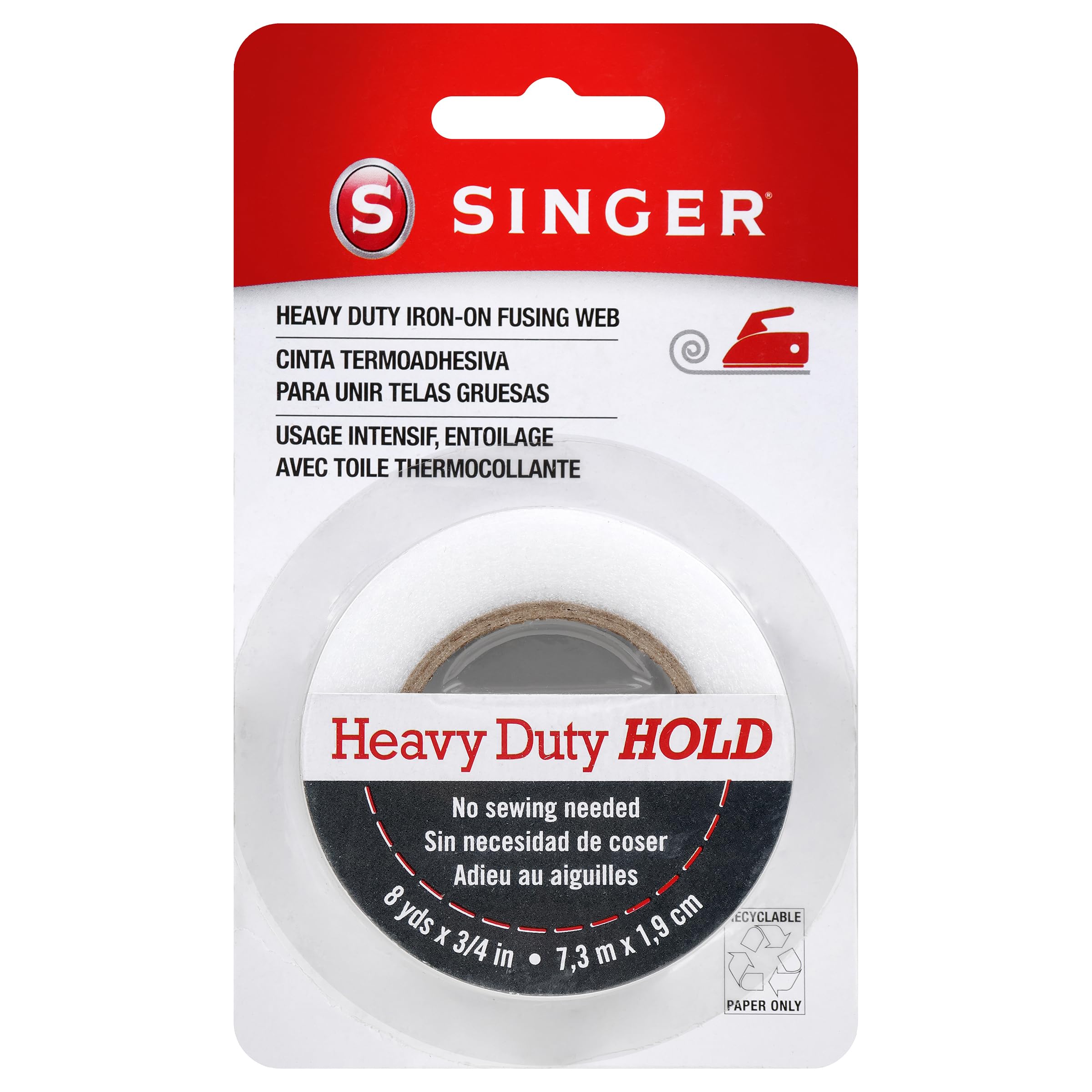
The SINGER Heavy Duty Iron-On Fusing Web is a narrow adhesive strip for joining fabric with an iron, making it useful for hems, facings, tears, and crafts.
This SINGER Heavy Duty Iron-On Fusing Web review looks at its project range, roll length, and the fabric-bonding tradeoffs to consider before choosing it.
SINGER Fusing Web Review Summary
The quick verdict
4,000+ ratings
Read Amazon ReviewsSINGER Heavy Duty Iron-On Fusing Web
A practical option for quick fabric mends, hems, and craft projects when you want to join fabric without sewing.
- Iron-on fabric adhesive web intended to fuse two pieces of fabric together without sewing.
- Roll measures 3/4 inch wide by 8 yards long.
- Designed for hems, facings, mending tears, and arts-and-crafts applications.
- Described for use with lightweight fabrics and heavier materials such as denim, corduroy, and twill.

Pros
- Offers a sewing-free way to join fabric for suitable projects.
- Eight yards can serve multiple small repairs and craft uses.
Consider before buying
- The 3/4-inch strip width may require careful placement or multiple strips on wider joins.
- Iron-on application depends on the fabric and project being suitable for heat and adhesive bonding.
Read the full review summary
This 3/4-inch-wide, 8-yard roll is intended for fusing two fabric pieces together without sewing.
Its format suits small repairs and projects where a strip of adhesive can hold an edge or seam area in place, and the roll provides length for multiple uses rather than a single repair.
The stated fabric range spans lightweight materials and heavier fabrics such as denim, corduroy, and twill.
That breadth makes the web worth considering for a mixed household or craft kit, though buyers should match the material and intended wear to the garment and project instructions.
It is most appealing when an iron-on bond offers a simpler route than stitching.
The buying factors
SINGER Fusing Web Scorecard
Editorial scores reflect listed features and buyer fit; they are not laboratory measurements or customer ratings.
Project versatility
The described uses include hems, facings, tears, and arts-and-crafts projects.
Fabric range
It is described for lightweight fabric and heavier examples including denim, corduroy, and twill.
Roll quantity
Eight yards gives material for multiple repairs, while the 3/4-inch width is suited to strip-style applications.
Sewing-free convenience
The web is designed to fuse two pieces of fabric without sewing, which can simplify selected projects.
Repair suitability
Mending tears and helping prevent fraying are among its intended uses, subject to project and fabric fit.
Application flexibility
The iron-on format is useful where heat application works for the fabric and the project allows it.
Key Features and Specifications of SINGER Fusing Web
- Iron-on fabric adhesive web intended to fuse two pieces of fabric together without sewing.
- Roll measures 3/4 inch wide by 8 yards long.
- Designed for hems, facings, mending tears, and arts-and-crafts applications.
- Described for use with lightweight fabrics and heavier materials such as denim, corduroy, and twill.
- Intended to help secure fabric edges and reduce fraying in repair and craft projects.
Pros and Cons of SINGER Fusing Web
Pros
- Offers a sewing-free way to join fabric for suitable projects.
- Eight yards can serve multiple small repairs and craft uses.
- The listed applications cover both garment finishing and general fabric crafts.
- The described fabric range includes lightweight options as well as several heavier fabrics.
Consider before buying
- The 3/4-inch strip width may require careful placement or multiple strips on wider joins.
- Iron-on application depends on the fabric and project being suitable for heat and adhesive bonding.
- For repairs that need stitching or reinforcement through repeated stress, buyers should consider whether an adhesive-only join fits the garment's use.
Who Should Buy SINGER Fusing Web?
Good fit
Consider this roll if you regularly hem, finish facings, mend small tears, or make fabric crafts and want an adhesive option alongside your sewing supplies.
The narrow strip format works naturally for edges and controlled joins, while the 8-yard length gives room for more than one project.
It may also suit someone who wants to avoid sewing on a particular project, provided the material can be ironed and the bond is appropriate for the garment's expected use.
Before starting, check the fabric care instructions and test a small, inconspicuous area if you are unsure how heat or adhesive will affect it.
Who should skip it
Skip this approach for a project if the fabric cannot be ironed or if its construction and expected strain call for a stitched repair. In those cases, a sewing method may be more suitable.
If you need a broad adhesive surface rather than a narrow strip, check whether the 3/4-inch width fits the seam or repair area before choosing this roll.
How SINGER Fusing Web Fits Common Fabric Repairs
A strip format for edges and joins
At 3/4 inch wide, the web is geared toward defined fabric edges and narrow joining areas. It can be a practical format for hems and facings, where an adhesive strip can sit along a fold or edge.
Wider areas may call for multiple strips, so consider the shape and dimensions of the repair before beginning.
Fabric compatibility matters
The described range includes lightweight fabric and heavier examples such as denim, corduroy, and twill. That gives the roll potential across different projects, but fabric weight alone does not determine whether an iron-on bond is a good fit.
Care instructions, surface texture, and how the repaired area will be used are sensible factors to check.
When adhesive can replace a few stitches
The web is intended to join two pieces without sewing, which may reduce steps on a simple hem, facing, or craft assembly.
For a repair in an area that flexes or bears frequent strain, think about the demands placed on the join and whether an adhesive-only method matches them. The right choice depends on the fabric and task.
Plan the roll around project size
Eight yards provides material for multiple small applications, but the narrow width makes placement an important part of planning.
Measuring the edge or join first helps estimate how much web a project needs and whether the format suits the area. This is especially useful when setting up a sequence of hems or several craft pieces.
Alternatives to SINGER Fusing Web
No alternative model is recommended here. Compare the design and features that matter to your routine before choosing another option.
Is SINGER Fusing Web Worth It?
The SINGER Heavy Duty Iron-On Fusing Web is worth considering for people who want a straightforward iron-on option for hems, facings, small tears, and fabric crafts.
Its 3/4-inch-by-8-yard roll offers a useful amount for repeat projects, and its described fabric range covers several common material types.
Choose it when the fabric is compatible with ironing and the project can use an adhesive join.
Check the width against the repair area, and use stitching or another repair method when the garment's construction or expected strain makes that a better fit.
Your review at a glance
4,000+ ratings
Read Amazon ReviewsSINGER Heavy Duty Iron-On Fusing Web
A practical option for quick fabric mends, hems, and craft projects when you want to join fabric without sewing.
- Iron-on fabric adhesive web intended to fuse two pieces of fabric together without sewing.
- Roll measures 3/4 inch wide by 8 yards long.
- Designed for hems, facings, mending tears, and arts-and-crafts applications.
- Described for use with lightweight fabrics and heavier materials such as denim, corduroy, and twill.